





Copyright © 2026 NOVABEYOND LIMITED (company number 2833487). All rights reserved.
Address: UNIT 616 6/F KAM TEEM INDUSTRIAL BUILDING 135 CONNAUGHT ROAD WEST SAI WAN HONGKONG.
Global app growth is often misunderstood as a scaling problem. In reality, it is usually a localization problem.
Many mobile brands can buy installs across multiple regions, but fail to build efficient growth because they treat different markets with the same messaging, same funnel logic, same monetization model, and same retention system.
That approach usually creates misleading CPI wins, weak Day-7 retention, poor payer conversion, and unstable ROAS.
For mobile apps expanding internationally, three regions frequently attract attention: Middle East, Southeast Asia, and Latin America. Each can deliver scale, but the growth engine required for each market is materially different.
This guide focuses on what actually matters: user psychology, conversion behavior, monetization realities, retention dynamics, and how growth teams should adapt strategy by region.
The Core Strategic Difference: Why One Global Playbook Fails
Most app teams over-focus on acquisition cost and under-focus on market behavior.
A low CPI region can still be unprofitable if onboarding completion is weak. A high CPM market can outperform if users monetize faster. A market with excellent install volume can fail if payment trust is low. A region with slower installs can outperform if subscription retention is strong.
That is why regional growth strategy should be evaluated through five lenses:
• Acquisition efficiency
• Activation quality
• Monetization potential
• Retention durability
• Creative / brand resonance
When viewed through those five lenses, the three regions differ significantly.
1. Middle East: High Intent Users, Trust-Led Conversion, Premium Growth Economics
Middle East is often one of the strongest regions for apps that monetize through transactions, subscriptions, premium services, or high-value commerce. The reason is not simply income level. It is that many users enter funnels with clearer intent and stronger willingness to pay when trust is established.
This changes how apps should grow.
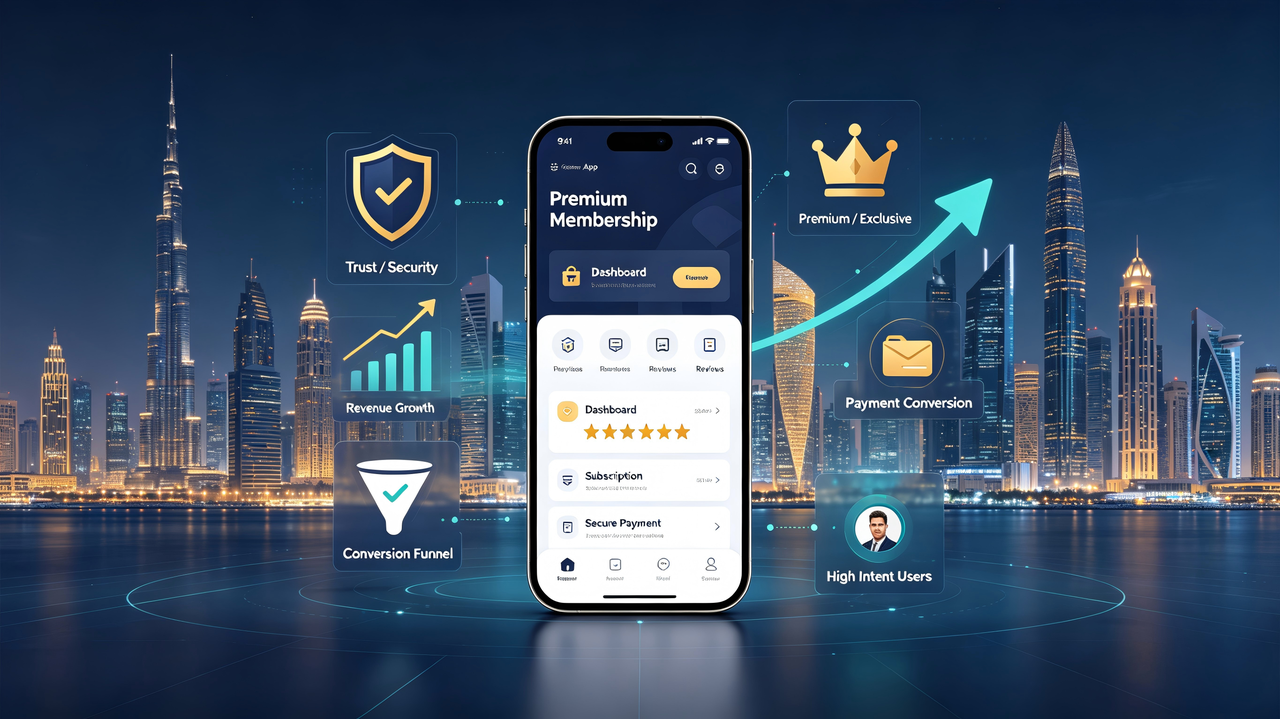
Unlike discount-led markets, aggressive price messaging is not always the best first lever. Users may respond better to signals of legitimacy, service quality, exclusivity, convenience, and brand confidence. In practical terms, creatives that feel polished and credible often outperform creatives that feel overly promotional.
Growth teams should therefore invest heavily in first-impression quality:
• premium app store screenshots
• clear trust messaging
• localized language experience
• strong review management
• elegant onboarding
• frictionless support touchpoints
Retention strategy should also differ. Many apps make the mistake of using generic push reminders. In this region, lifecycle messaging often performs better when framed around status, personalization, convenience, or privileged access rather than simple urgency.
The biggest mistake brands make here is entering with low-trust creative, weak localization, or bargain-bin positioning. Users may install, but conversion efficiency drops quickly if the product feels low quality.
Strategic takeaway: optimize for credibility before volume.
2. Southeast Asia: Scale Market, Price Sensitivity, Retention Determines Real Profitability
Southeast Asia is one of the most attractive regions for user growth because install scale can be substantial, mobile behavior is deeply embedded, and many categories still have room to expand. However, teams often misread SEA because they focus only on acquisition volume.
SEA can generate users fast. The harder question is whether those users stay, pay, and repeat.
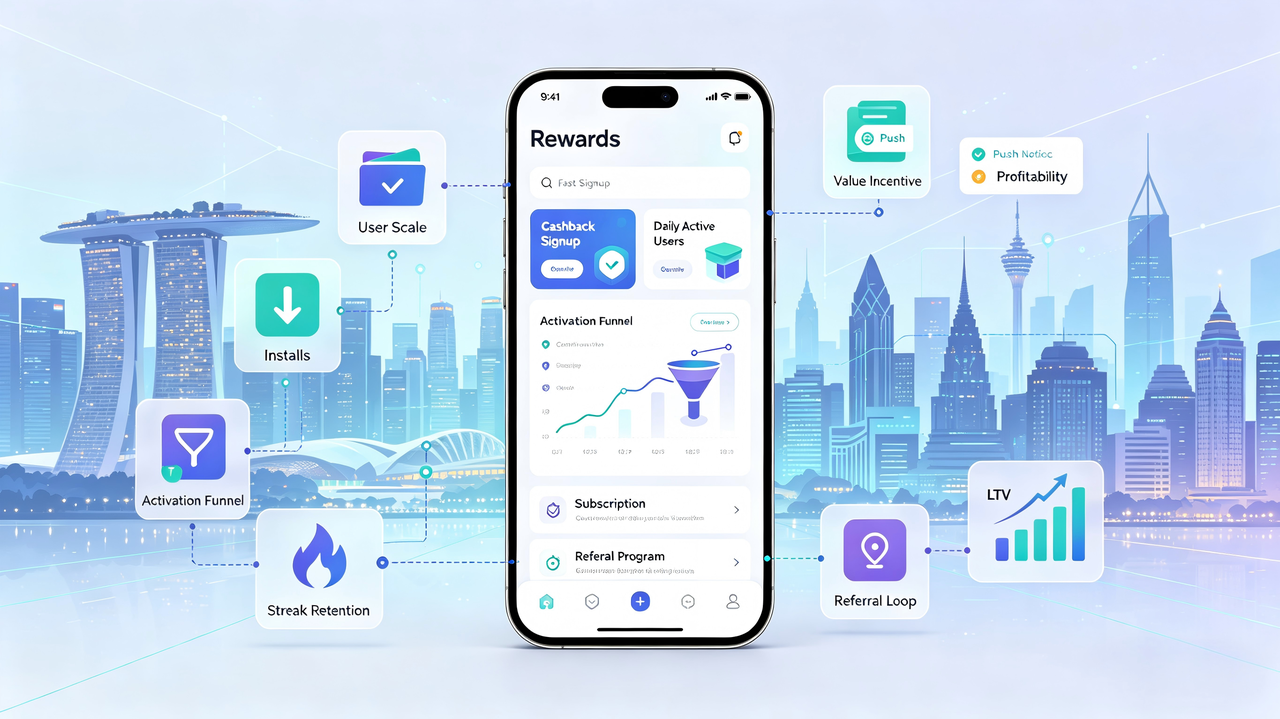
This is a region where value perception matters significantly. Users often compare alternatives quickly, switch products easily, and respond strongly to tangible benefits. That means your growth model must prove usefulness early.
Activation is therefore more important than many teams expect. If the product benefit is not obvious within the first session, churn accelerates.
Winning strategies usually include:
• faster time-to-value after install
• simplified registration
• immediate feature demonstration
• incentive-driven first conversion
• localized onboarding flows
• ongoing reward logic
Because many users are highly promotion-aware, discounts alone can create shallow growth. Teams that rely only on coupons often see poor loyalty and unstable margins. The stronger model is combining incentive entry points with habit-forming product utility.
Retention mechanics are critical. Push notifications, in-app rewards, streak logic, referral loops, gamified progression, and localized CRM flows can outperform pure paid reacquisition.
Monetization models often need flexibility. Freemium, hybrid ad revenue, lower-priced subscription tiers, bundles, and periodic promotions can outperform rigid premium pricing.
The biggest mistake in SEA is celebrating cheap installs while ignoring low-quality activation and weak retention.
Strategic takeaway: acquisition scales growth, retention creates profit.
3. LATAM: Emotion-Driven Conversion, Social Momentum, Monetization Requires Flexibility
Latin America is one of the most responsive regions for brands that understand community behavior, emotional positioning, and social influence. Users often engage actively with brands, share experiences, and respond strongly to products that feel human, useful, and aspirational.
This creates a different growth environment from trust-led Middle East markets or utility-led SEA funnels.
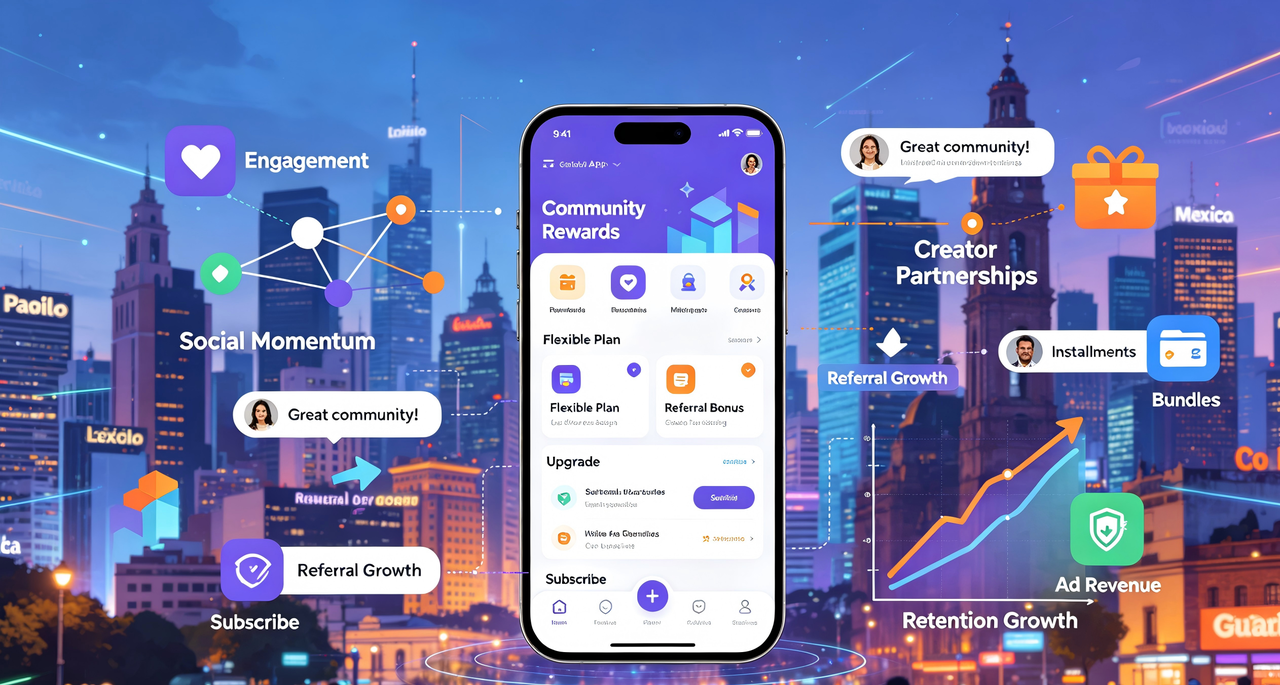
Creative strategy matters enormously here. Highly polished corporate messaging may underperform compared with relatable, energetic, benefit-led storytelling. Ads and organic content that feel authentic often convert better than overly formal brand language.
That means growth should combine paid media with social proof ecosystems:
• creator partnerships
• user testimonials
• community-led campaigns
• referral programs
• social engagement loops
• culturally relevant moments
Activation usually improves when onboarding feels motivating rather than transactional. Show benefits, progress, transformation, savings, convenience, or lifestyle improvement quickly.
Monetization requires realism. Even when engagement is high, purchasing behavior may fluctuate with macroeconomic conditions. Teams should reduce payment friction and widen conversion options through:
• lower entry pricing
• installment logic
• promotional bundles
• ad-supported tiers
• flexible subscription structures
Retention often improves when brands communicate consistently and warmly rather than purely pushing offers. Users may stay connected to products they emotionally identify with.
The biggest mistake in LATAM is importing a cold performance-marketing model without community building or pricing flexibility.
Strategic takeaway: emotional relevance often outperforms mechanical optimization.
Direct Regional Comparison for Growth Teams
| Growth Factor | Middle East | Southeast Asia | LATAM |
| Primary Conversion Driver | Trust + premium value | Utility + incentives | Emotion + relatability |
| Biggest Growth Advantage | Strong monetization potential | Large install scale | High engagement response |
| Main Risk | Low trust kills conversion | Weak retention hides behind CPI | Monetization volatility |
| Best Early Focus | Brand credibility | Activation speed | Creative resonance |
| Best Monetization Style | Subscription / premium / transactional | Freemium / hybrid / promo-led | Flexible pricing / hybrid |
| CRM Tone | Personalized, premium | Rewarding, practical | Human, energetic |
| Common Mistake | Cheap-looking positioning | Chasing installs only | Overly corporate messaging |
How to Build a Smarter Regional Growth System
Instead of launching one global campaign structure, leading app teams localize growth in four layers.
1. Regional Funnel Design
Do not assume install → signup → pay works equally everywhere. Diagnose each region’s biggest leak first.
• Middle East may require stronger trust before signup
• SEA may require faster first value
• LATAM may require better emotional buy-in
2. Regional Monetization Architecture
Offer structures should vary by market maturity and purchasing behavior.
3. Regional Creative Systems
One translated ad set is not localization. Messaging psychology should differ by region.
4. Regional Retention Engines
Push timing, incentives, lifecycle messaging, and reactivation triggers should reflect user behavior in each market.
Final Perspective
Middle East, Southeast Asia, and Latin America can all become major growth engines for mobile apps, but only when approached differently.
Middle East rewards trust and premium execution. SEA rewards product utility and retention discipline. LATAM rewards emotional connection and flexible monetization.
The teams that scale globally are rarely those with one universal playbook. They are the teams that know when to stop being global and start being local.
For brands looking to scale across these regions, success usually depends on combining localized growth strategy with efficient execution across paid media, programmatic acquisition, creative adaptation, lifecycle retention, and performance optimization. Market expansion is rarely driven by traffic alone, it comes from building region-specific growth systems that can scale sustainably.
At Novabeyond, we help mobile app advertisers unlock cross-market growth through regional user acquisition strategy, programmatic media solutions, performance creative support, and full-funnel optimization across emerging markets. Whether the goal is entering a new region, improving ROAS, or scaling existing campaigns, the strongest results usually come from treating every market differently, and growing each one intelligently.
more posts
AI’s Impact on Gaming, Short Drama, and Live Commerce Advertising: Why Traffic Reallocation Is Reshaping App Growth
June. 15 2026
LEARN MORE

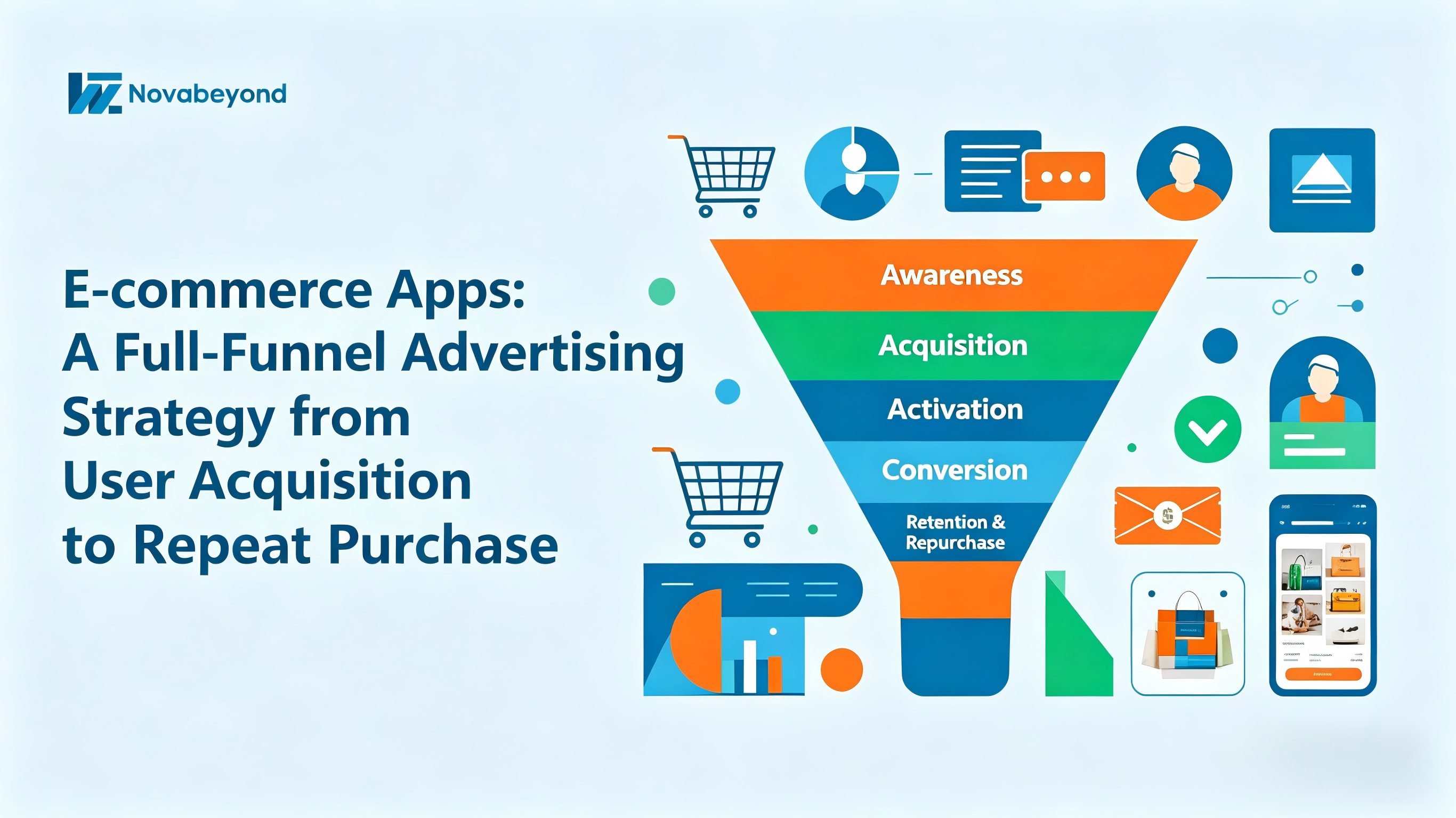
E-commerce Apps: A Full-Funnel Advertising Strategy from User Acquisition to Repurchase
June. 03 2026
LEARN MORE
From Generic Creative to Smart Matching: How DPB & DCO Drive Better ROAS
June. 02 2026
LEARN MORE
Why Most Apps Hit a 30-Day Growth Ceiling And How to Break It
April. 14 2026
LEARN MORE